ServicesWhole-house carbon filtration
Whole-House Carbon Filtration in Balch Springs
Chlorine you can smell in the shower or taste in your coffee is usually the disinfectant that city water carries into your home. A single carbon tank on the main line takes it out for every faucet, shower and appliance. We test your water and inspect your plumbing before suggesting any size.
How carbon treats the water in your home
Before it reaches your street, city water is treated with a disinfectant, and that is the part most people notice: a sharp smell when the shower runs hot, a flat note in morning coffee, ice that tastes faintly of bleach. Activated carbon grabs chlorine and many organic compounds as water flows across it, so what comes out of each tap, showerhead and appliance tastes and smells cleaner.
We do not start with a product. We start with a test and a look at where your main line enters, how much room there is, and how your household uses water. Some water systems treat with chloramine rather than plain chlorine, and that changes the carbon you need, so we confirm which one you have before recommending anything.
Carbon is not the answer for everything. It does not soften water or remove dissolved minerals, and for drinking water concerns like lead from older plumbing, under-sink reverse osmosis is the better tool. If the test points elsewhere, we will tell you.
What you get with the install
- Testing and a look at your plumbing
- We measure chlorine or chloramine, check for sediment and take a pressure reading. We also record the pipe size and material at the main, because those decide the fittings and the flow the system must keep up with.
- Carbon matched to your supply
- Ordinary granular activated carbon handles chlorine well. Chloramine takes catalytic carbon and longer contact, so we size the tank to allow for that.
- A prefilter for grit
- Ahead of the carbon tank, a sediment cartridge catches sand and grit so they never reach the media. With that debris kept out, the carbon gets nearer to its rated lifespan.
- A bypass and a neat install
- Each system includes a bypass, so your home still has water while we service it. Piping runs neatly, valves get labels, and the work area ends up cleaner than when we arrived.
- A walkthrough and upkeep timing
- Before leaving, we show you how to use the bypass and what signs to keep an eye on. You also get a simple note on when the prefilter and the carbon will be due.
Signs a carbon system fits your home
A bleach smell at bath time
Warm water lets chlorine escape as vapor, which is why the bathroom is usually the first place you notice it.
Water that tastes off
Coffee, tea and ice that taste flat or chemical usually point to disinfectant, not to anything harmful. Carbon handles this well.
Dry skin and dull hair after bathing
Many people notice softer skin and hair once chlorine is out of the shower water. A pitcher filter in the kitchen cannot help here.
Filters at several faucets
If you are changing a fridge filter, a pitcher and a shower filter, one system at the main can be simpler and cover taps you are not filtering now.
What affects the price
We price each system after the inspection, because two homes on the same street can need different setups. Your estimate breaks out every part and the labor separately, so nothing is bundled into one vague number. The factors below move it most.
Chlorine or chloramine
Chloramine needs catalytic carbon and a larger tank for enough contact time, which costs more than a standard chlorine setup.
Household size and peak use
A home with three or four bathrooms draws far more water during the morning rush. The tank has to be larger so showers stay strong while the dishwasher and laundry are also running.
Access to your main
When the supply comes in through a garage wall with open floor space beside it, installation is straightforward. A line tucked into a narrow closet or entering from an exterior wall may need rerouting, which adds time and materials.
Pipe material and permits
Older or mixed pipe can need extra fittings, and any required permit adds a fee and an inspection visit.
How a job runs
- 1
Inspection and test
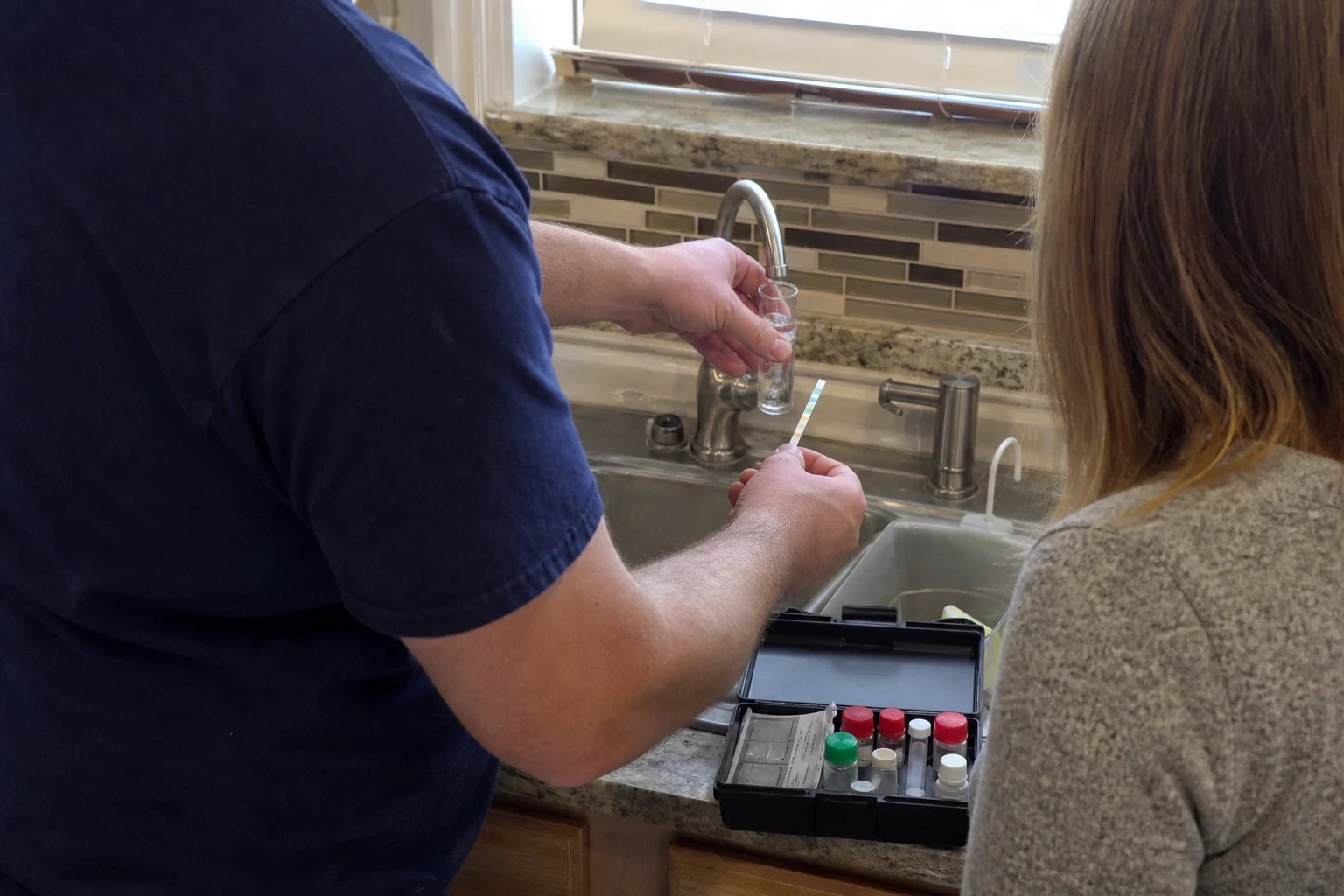
We visit, test your water, and look at the main line and the space around it. You get the readings in plain terms and an honest answer on whether carbon is the right fit.
- 2
Written estimate
If it is, we give you a line-item estimate covering the tank, media, prefilter, fittings and labor. We also tell you if the work will need a plumbing permit in your city.
- 3
Installation day
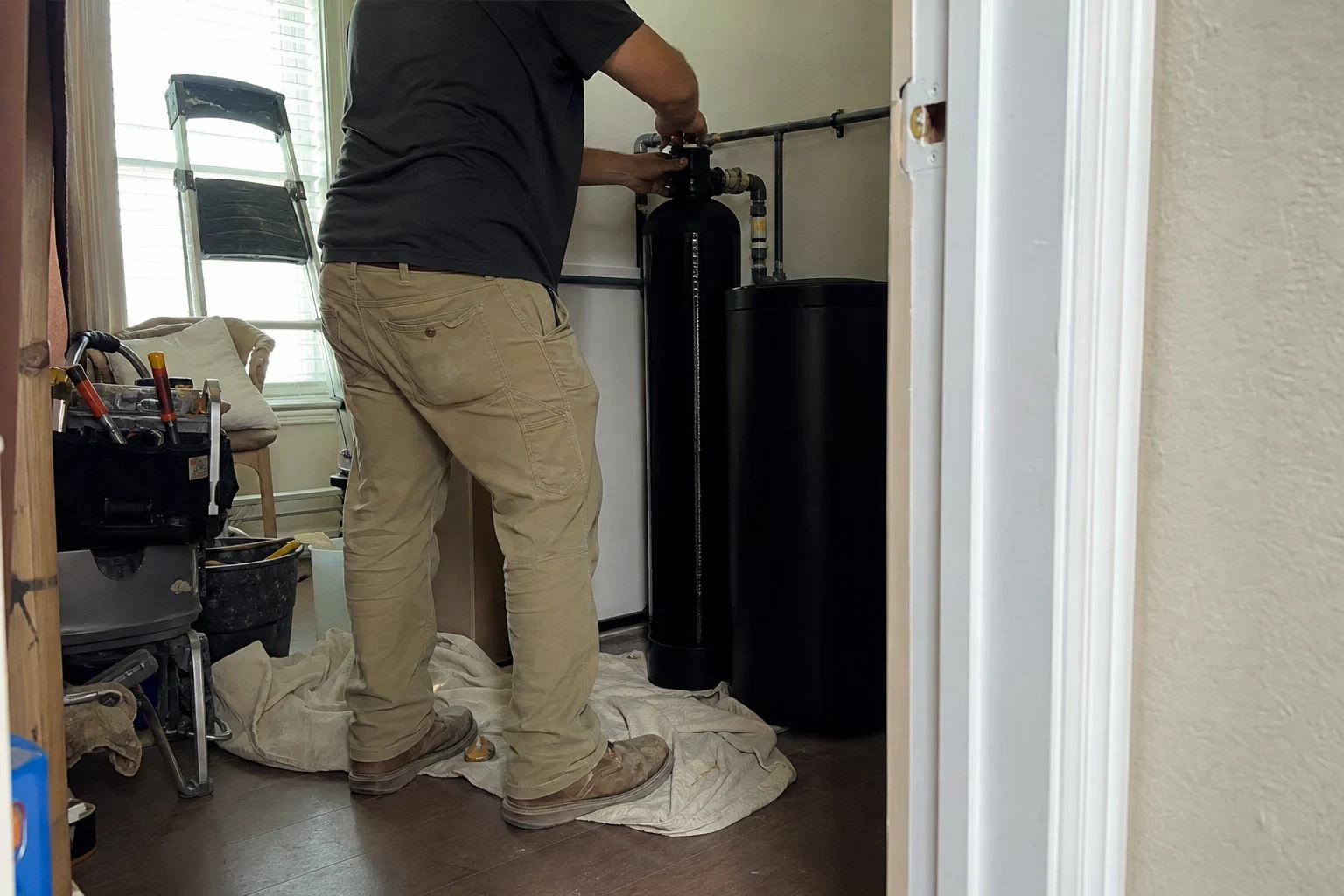
Most installs take a few hours. We shut the water off briefly, lay down floor protection, plumb in the system with a bypass, and flush the new carbon until the water runs clear.
- 4
Final check
We retest at a faucet so you can see the chlorine reading drop, then walk you through the system and its upkeep.
Common questions about whole-house carbon systems
Will my water pressure drop with a carbon system?
Not in a way you should feel day to day, as long as the tank is the right size. We take a pressure reading and match the tank to your highest flow. Weak showers come from tanks that are too small, so we size from what we see at the inspection, not from a catalog page.
When does the carbon have to be replaced?
That comes down to your household's water use and the amount of disinfectant in the supply. The sediment prefilter needs changing more often, typically every few months, and the carbon lasts a good deal longer. Our filter replacement and maintenance service keeps track of both.
Will whole-house carbon take out lead?
We do not count on it for lead. If older plumbing worries you, start with water testing, and if the results call for it, an under-sink reverse osmosis unit at the kitchen tap covers drinking and cooking water.
Does carbon soften the water?
No. Hard water comes from dissolved calcium and magnesium, and activated carbon lets both pass. If white buildup on fixtures and glasses is what bothers you most, we test hardness and suggest a softener only if the reading justifies one.
Can I drink the water as soon as the install is done?
Yes, after we flush the fresh carbon. New media can release fine dust that turns the first water gray, so we keep it running until it comes out clear before we go.
Start with a look at your water
We will test what is coming into your home, show you the readings, and tell you plainly whether a carbon system makes sense. We work in Balch Springs and nearby towns like Mesquite and Seagoville.