ServicesWater testing
Water Testing in Balch Springs
A filter is only as good as the reason behind it. We measure the water at your own taps, send samples to an independent lab when the question calls for it, and explain every reading in plain language. Some visits end with the news that your water needs nothing.
What a proper water test tells you
Water problems usually announce themselves as a symptom: a chlorine smell in the shower, orange rings in a toilet bowl, spots on glassware, a metallic edge to the morning coffee. The causes behind them differ, and so do the right fixes. Buying equipment on a guess often means the wrong unit ends up under the sink.
A test turns the symptom into a measurement. We check hardness, iron, chlorine, pH and dissolved solids on site, and we look at the plumbing the water passes through on its way to your faucet. City water in North Texas generally meets drinking water standards when it leaves the treatment plant, so when we find an issue it often starts inside the home, in older galvanized or soldered copper lines.
The results are yours to keep, with no purchase expected. That is the point of testing first.
What your water test includes
On-site panel at the tap
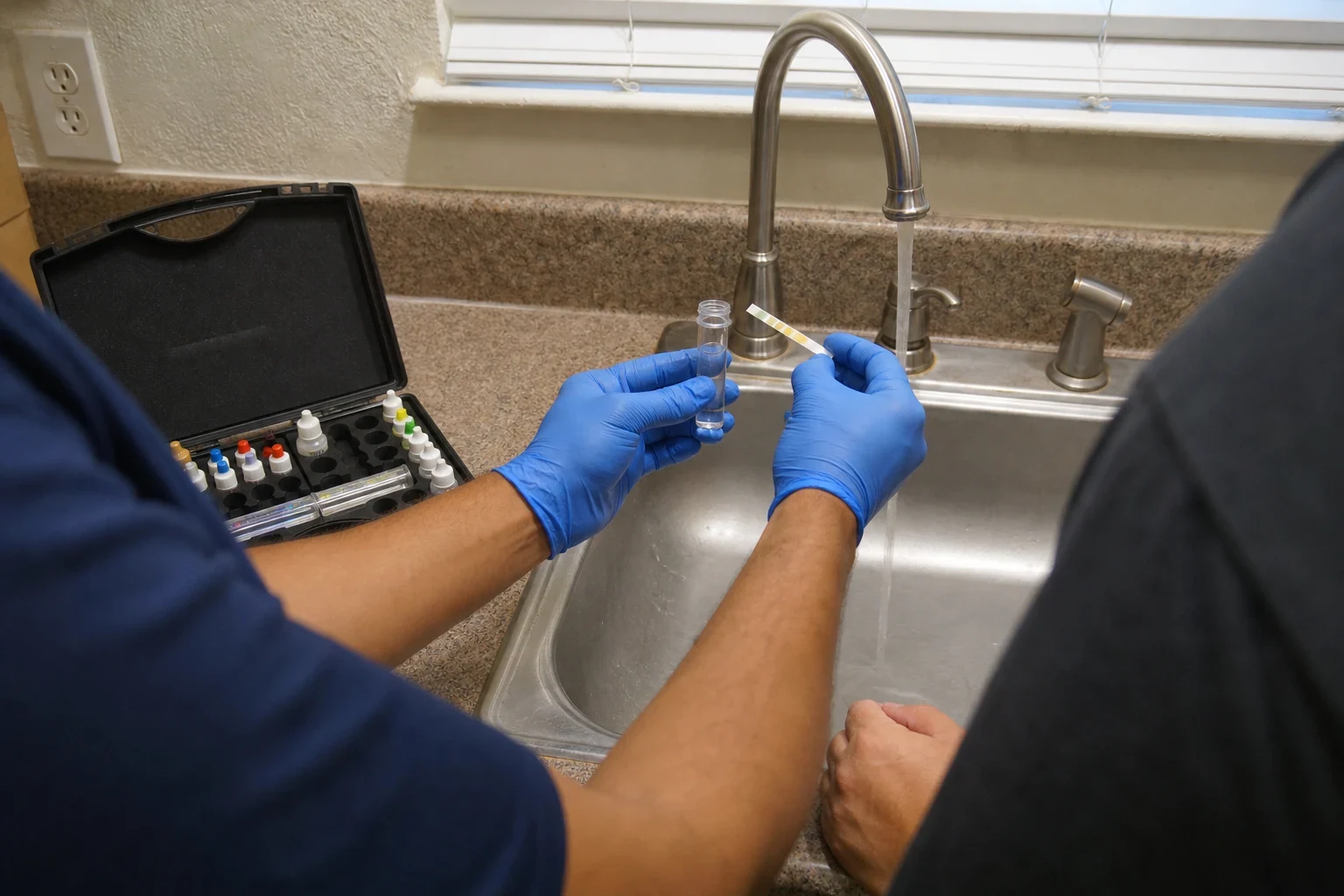
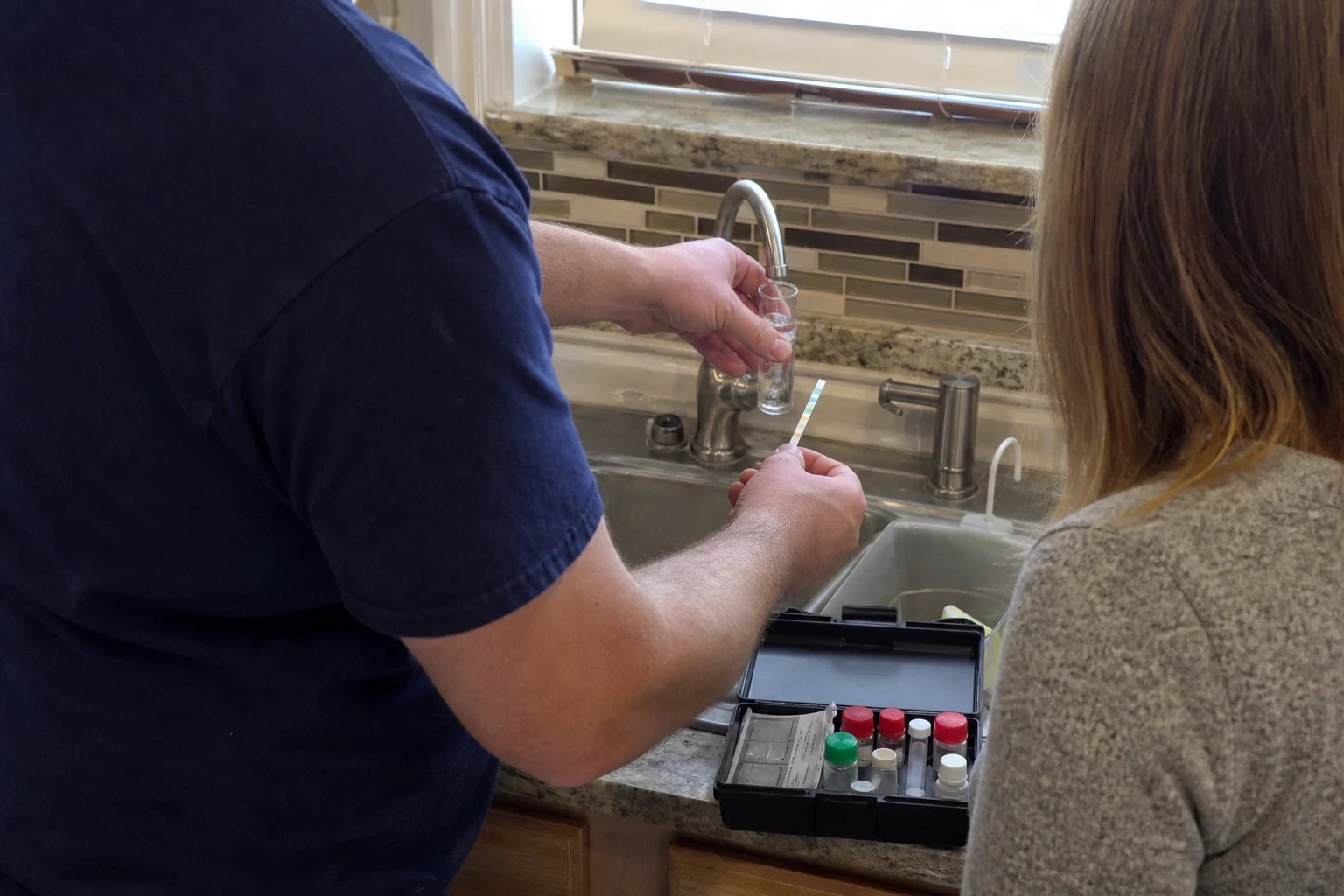
We measure hardness, iron, free chlorine, pH and total dissolved solids from your kitchen tap. You watch the readings as we take them.
Your plumbing, observed
Wherever pipes are exposed, we record what they are made of, along with the age of your water heater and any filters or softeners already in place. A corroded fitting or an overdue cartridge sometimes explains more than the water does.
Independent lab samples when needed
Lead, bacteria and some trace contaminants cannot be measured reliably with a field kit. When your situation calls for it, we draw a sample and send it to an independent lab, then go over the report with you.
Private well checks
Homes on a private well in the surrounding area carry different risks than city water. We adjust the panel for well water and recommend a bacteria test when one has not been done recently.
Written findings
You receive the results in writing, with each reading next to the level that would normally call for treatment. If nothing needs fixing, the paper says so.
When a water test makes sense
- A pool smell at the faucet
- Treated city water often carries a faint chlorine odor at the shower or kitchen sink. Measuring the level shows if whole-house carbon filtration or a simple drinking water filter is the better match.
- Orange or brown staining
- Rust-colored rings in sinks, tubs and toilets usually mean iron, either from the source or from aging pipes. The test separates the two, which matters before choosing iron and sediment filtration.
- White crust and spotty dishes
- Scale on faucets and showerheads suggests hardness, but it can also come from evaporation in a hot climate. We measure before anyone talks about a softener.
- An older home or recent plumbing work
- Homes with original galvanized lines or older solder joints are worth checking for lead, especially with young children in the house. Plumbing repairs can also stir up sediment.
- A new baby or a new house
- Many families simply want a baseline when they move in or start preparing formula. A test gives you a clear starting point.
What happens during your test visit
- 1
A quick phone call
Describe what you have noticed and let us know if you are on city water or a private well. Together we pick the tests that are worth running, so you skip the ones you don't need.
- 2
At your home
We let cold water run at the kitchen tap, take our on-site readings and check the plumbing and any equipment you already have. Most visits wrap up in under an hour, and the area is left just as it was.
- 3
Lab samples, when you want them
If lead or bacteria is the question, we draw the sample following the lab's handling instructions and ship it. Results come back in a few days.
- 4
Results first, choices second
We go through every number and what it means for your house. If treatment would help, we lay out choices like under-sink reverse osmosis or a whole-house system, and you take whatever time you need to decide.
What affects the cost of water testing
Two things set most of the bill: how long the list of measurements runs, and whether a sample travels to an independent lab. We go over the cost on the phone before we come out, so nothing on the invoice is a surprise and every test on it has a reason behind it.
- On-site panel only, or lab work too
- A field panel for hardness, iron, chlorine and pH costs less than a full analysis from an independent lab. Lab testing is worth it for lead and bacteria, and less often needed for taste questions.
- City water or private well
- Well water usually calls for a broader panel, including bacteria, because there is no utility treatment ahead of your tap.
- Number of sample points
- Testing one tap answers most questions. If you suspect a problem in one bathroom or a newer addition, a second sample point adds a little to the visit.
- Retesting later
- Once a system is in place, a second test shows how well it is working. Homeowners on a well often choose to repeat the panel each year.
Common questions about water testing
- Is the test just a lead-in to selling a filter?
- We report what the readings show. When the water is fine, we tell you and head out. When something deserves treatment, we explain the choices and why, and you make the call.
- Doesn't the city already test the water?
- It does, at the source and across the system, and the water usually meets standards. The utility can't test the pipes between the street and your faucet, though. Lead, iron and sediment often come from inside the house, so a test at your own tap fills that gap.
- Does hard water mean I need a softener?
- Not always. Plenty of homes have only moderate hardness, and spots can come from other things. We take a hardness reading first and recommend a water softener only if the number backs it up.
- Will test strips from the store do the job?
- Strips can roughly show hardness or chlorine, which is a fair first step. They can't be trusted for lead or bacteria, and they say nothing about how your water reacts with your pipes. For those questions, a lab sample is what you need.
- When will lab results be ready?
- Typically a few business days after the lab receives the sample. Once the report is in, we call and walk through each line with you.
- Do you come out to homes beyond Balch Springs?
- Yes. We also test in Mesquite, Seagoville, Forney, Sunnyvale and other towns close by. Mention your town when you call and we will confirm.
Start with the numbers
Knowing what your water holds should come before any money goes toward equipment. We take the readings, explain them clearly and leave the decision in your hands.