ServicesFilter replacement and maintenance
Filter Replacement and Maintenance in Balch Springs
A filter only works as well as its last change. We look over your system before touching a cartridge, measure how it is performing, replace what is spent and leave the housings clean, sealed and dated. You know what was done and when the next visit makes sense.
Care for the System You Already Own
Every filter in your home is slowly filling up. Sediment cartridges load with grit, carbon runs out of capacity to hold chlorine, and reverse osmosis membranes foul a little more each month. Nothing fails loudly. Water pressure drifts down, taste creeps back, and an old cartridge can start to shed what it once caught.
We start each visit by checking the system as it stands: pressure before and after the filters, the condition of each housing and O-ring, and on drinking water units, a dissolved solids reading at the tap. Then we tell you plainly what needs replacing and what still has life in it. If a cartridge is fine, we leave it.
We service whole-house carbon, iron and sediment systems, softeners and under-sink reverse osmosis, including equipment another company installed.
What a Maintenance Visit Covers
- Performance readings
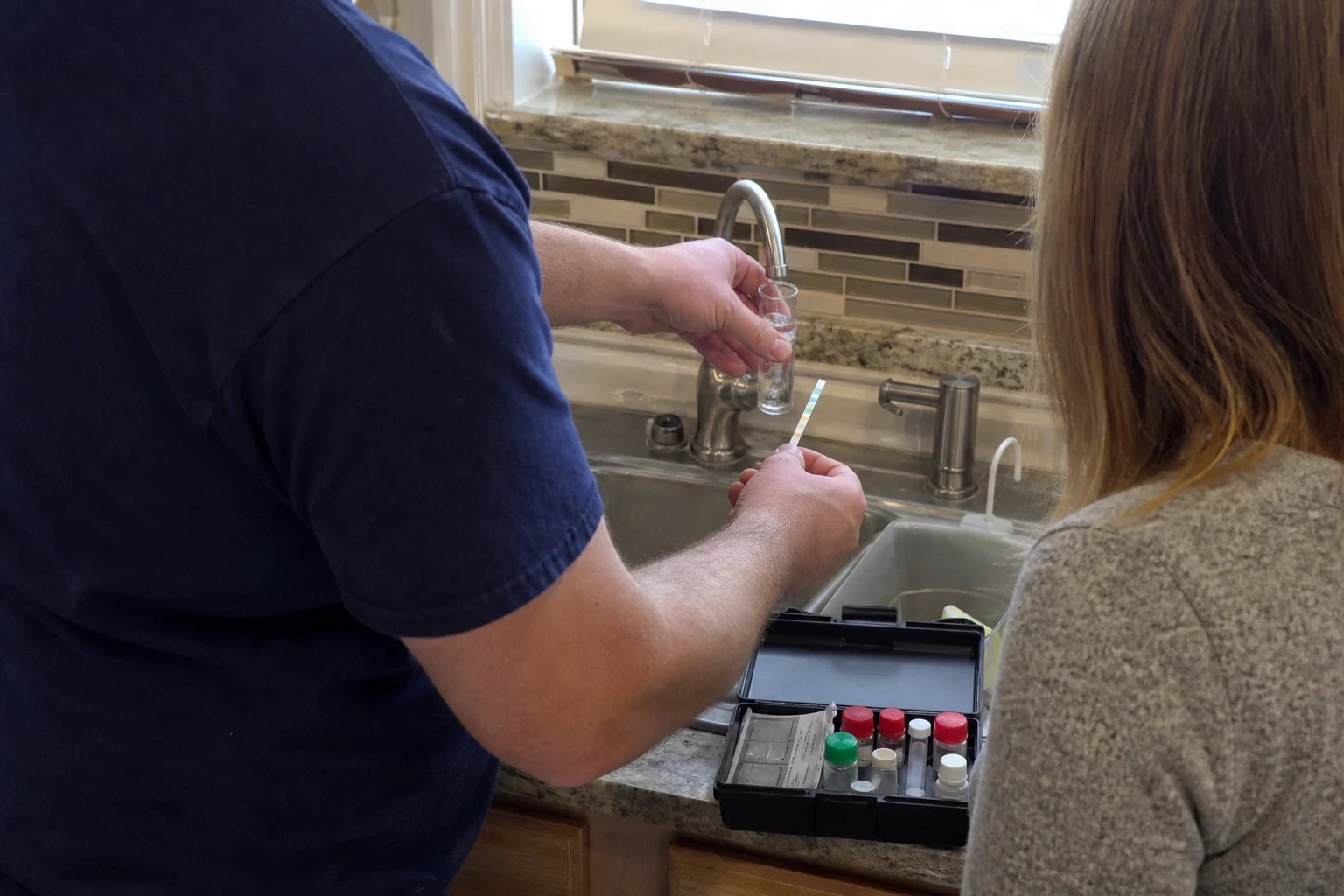
- We note inlet and outlet pressure on whole-house systems and take a TDS reading on reverse osmosis water. Those numbers show whether a filter is actually spent rather than guessing from the calendar.
- Cartridge and media replacement
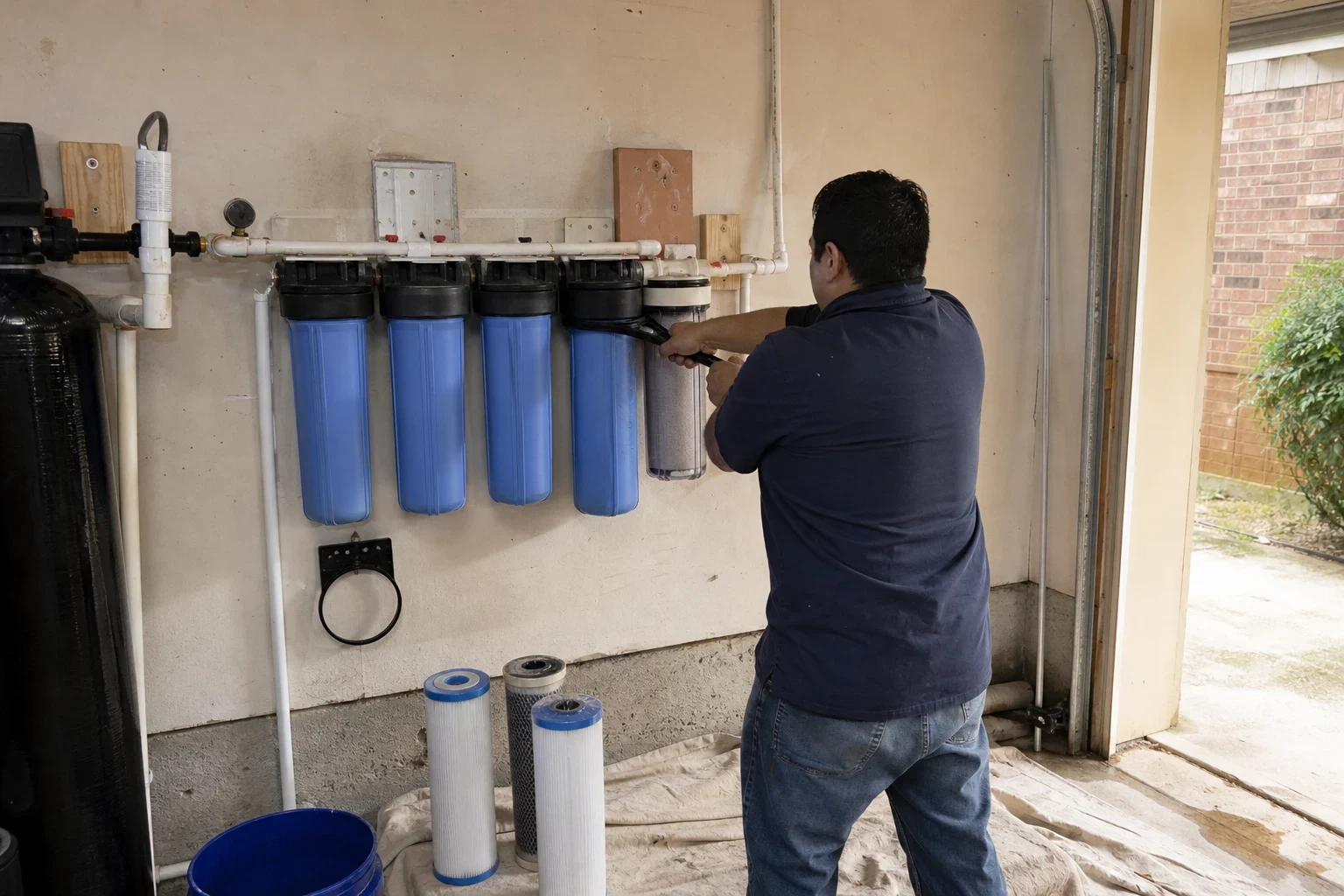
- Sediment, carbon block and post-filters are swapped for cartridges that match your housing's size and micron rating. We bring the correct parts for the system you describe on the phone.
- Housing and seal care
- Each sump is emptied, washed and inspected for hairline cracks. O-rings are checked, replaced if flattened, and lightly coated with food-grade silicone so the housing seals without being overtightened.
- Reverse osmosis membrane check
- We look at rejection rate and tank pressure. A membrane that still performs stays in place; one that has fallen off gets replaced, and we tell you which it is.
- Softener and backwash inspection
- On softeners we check the salt level, break up any salt bridge and confirm the regeneration settings. On iron and sediment tanks we look at the backwash cycle and the bypass valve.
- A dated record
- Every housing gets a label with the change date. You also get a short written note of readings, parts replaced and when the next change is likely due.
Signs Your Filters Are Due
Pressure has dropped
Showers feel weaker or the washer fills slowly. A loaded sediment or carbon cartridge restricts flow long before it stops it.
The chlorine taste is back
When carbon reaches capacity, the smell and taste it used to remove return at the kitchen tap.
The RO faucet runs slow
A drinking water tap that trickles, or a storage tank that never seems full, usually points to tired prefilters or a fouled membrane.
Discolored cartridges or leaks
Brown or orange cartridges, damp spots under a housing, or a drip at the sump threads all deserve a look.
No one knows the last change date
If you moved into a home with a system already in place, assume it is overdue. We can find out quickly.
What Moves the Cost
Most of a maintenance visit's price is in the parts, so it follows the kind of system you have and how many stages it runs. We give you the cost by phone once we know your equipment, and confirm it on site after the inspection before any work starts.
Number of stages and systems
A single whole-house cartridge is a simpler visit than a five-stage reverse osmosis unit plus a softener. Servicing several systems on one visit is more efficient than separate trips.
Cartridge type and availability
Standard-size cartridges are easy to source. Proprietary or discontinued housings may need specific parts or an adapter.
How overdue the system is
A filter changed on time usually needs just the cartridge. One left far too long can foul the membrane behind it or leave a housing seized on its threads.
Condition of housings and fittings
A cracked sump, worn valve or brittle tubing adds parts. We point these out with the reason before replacing them.
From Phone Call to Fresh Cartridges
- 1
Describe your equipment
On the phone, give us whatever details you have about the unit under the sink or in the garage, plus anything that has seemed off lately. A brand and model read off the label is useful, though a general description is enough to get started.
- 2
Inspection and readings
We shut off water to the system, protect the floor beneath it and take our pressure and TDS readings. Units in a garage get a closer look at seals, since long summer heat ages O-rings and plastic faster.
- 3
Plain findings
Before replacing anything, we show you what we found and which parts are spent. You decide what we do.
- 4
Replacement and flush
New cartridges go in, housings are sealed and the system is flushed until the water runs clear. We check every connection for drips before we leave.
- 5
Cleanup and record
Old cartridges leave with us, the area is wiped down and you get your dated service note.
Common Questions About Filter Upkeep
How often do my filters need changing?
It depends on the filter and how much water your household uses each day. Small grit and chlorine prefilters usually need new cartridges a few times a year, while reverse osmosis membranes and whole-house carbon tanks last much longer. After the first visit, we base your schedule on your own readings instead of a one-size chart.
Will you service a system another company installed?
Yes. Common brands and standard housing sizes are everyday work for us. If your unit uses a proprietary cartridge, we tell you on the call and get the right part before the visit.
Is it okay to swap cartridges myself?
Plenty of homeowners do, and we're glad to show you the steps. Slow leaks usually come from pinched O-rings or sumps tightened too hard. Some people leave membranes and softeners to us and handle the simple prefilters on their own.
Is a maintenance plan required?
No. Just call when something comes due. We keep notes on your system, so each visit picks up from what we already know.
The water still tastes off with new filters. Now what?
Most likely the system doesn't match what's in your water, or the water itself has changed. Water testing shows which one it is, and we go over the results before recommending anything more.
Find Out Where Your Filters Stand
We check your system first, show you the readings and replace only what is spent. Tell us what you have and we will bring the right parts.