ServicesIron and sediment filtration
Iron and Sediment Filtration in Balch Springs
Rust-colored stains, gritty aerator screens and cloudy water usually have a cause we can find. We test your water and look at your plumbing first. Then we explain in plain terms whether a filter will help, which type fits and what it takes to keep it running well.
What iron and sediment filtration does
Sediment filters catch the particles you can see or feel: sand, grit, flakes of pipe scale and loose rust. Iron is harder to spot. Dissolved iron passes through looking like clear water, then oxidizes into orange or brown stains once it meets air in a toilet tank, a shower or the washing machine.
The two problems often show up together, but they need different equipment. A cartridge sediment filter on the main line is simple and easy to maintain. Dissolved iron usually calls for an oxidizing media tank that turns the iron into a solid and backwashes it away. Choosing the wrong one means paying for a system that changes nothing.
So we start with a test and a careful look around. Many homes on city water in Balch Springs never need an iron filter at all, because the staining traces back to aging galvanized pipe or a water heater shedding rust. When that is what we find, we tell you.
What the work includes
A water test before anything else
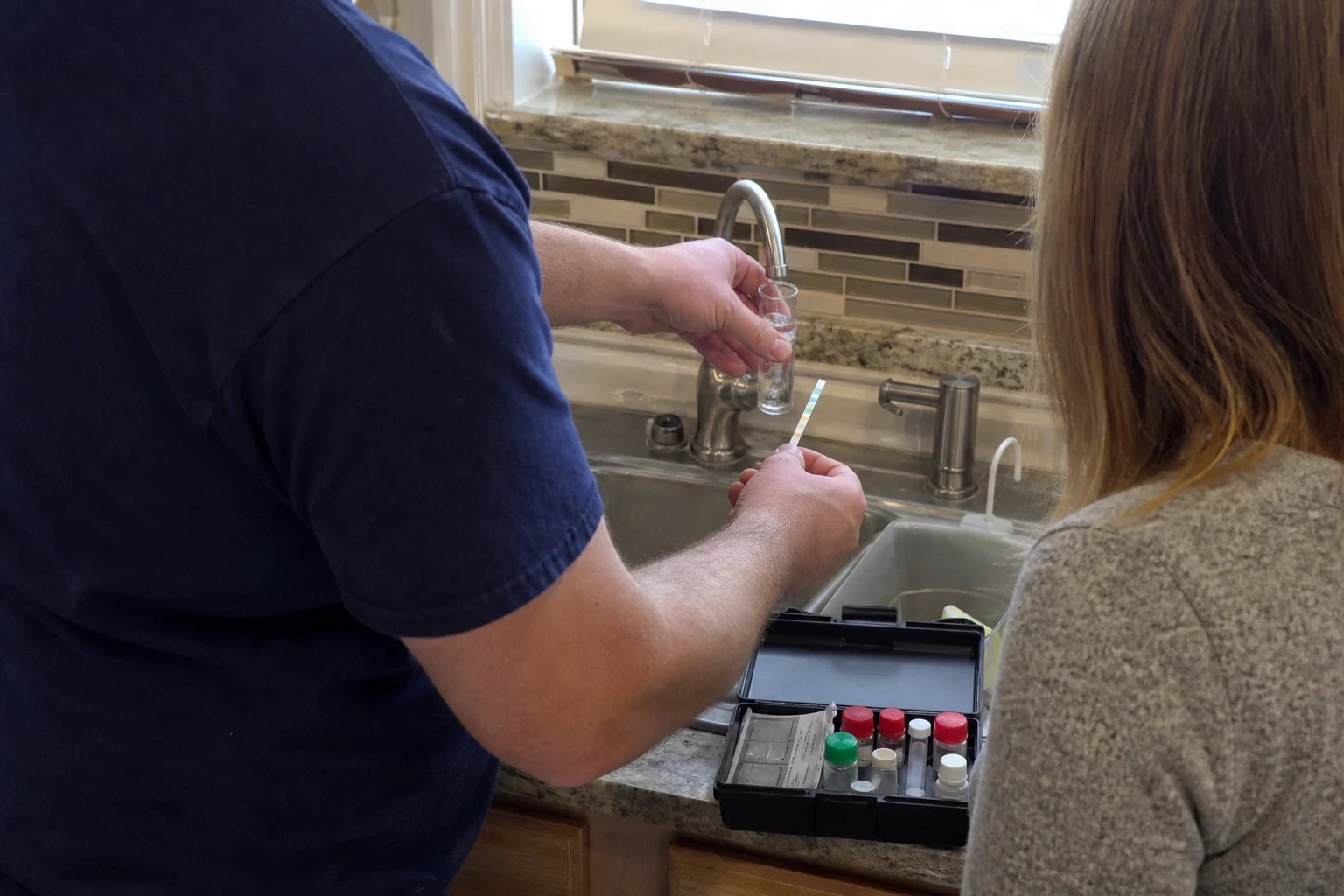
We measure iron, manganese, hardness, pH and cloudiness in your water. pH matters more than most people expect, because it decides which iron media will actually work. You get the numbers written down, not just a verbal summary.
Tracing where the problem starts
We check the water heater, the visible supply lines and the fixtures where stains appear. Rust that shows up only on the hot side points to the heater, not the incoming water.
Equipment sized to your home
Filters are matched to your flow rate and number of bathrooms, so pressure holds when two showers run at once. Undersized housings clog quickly and cost more over time.
A clean install at the main line
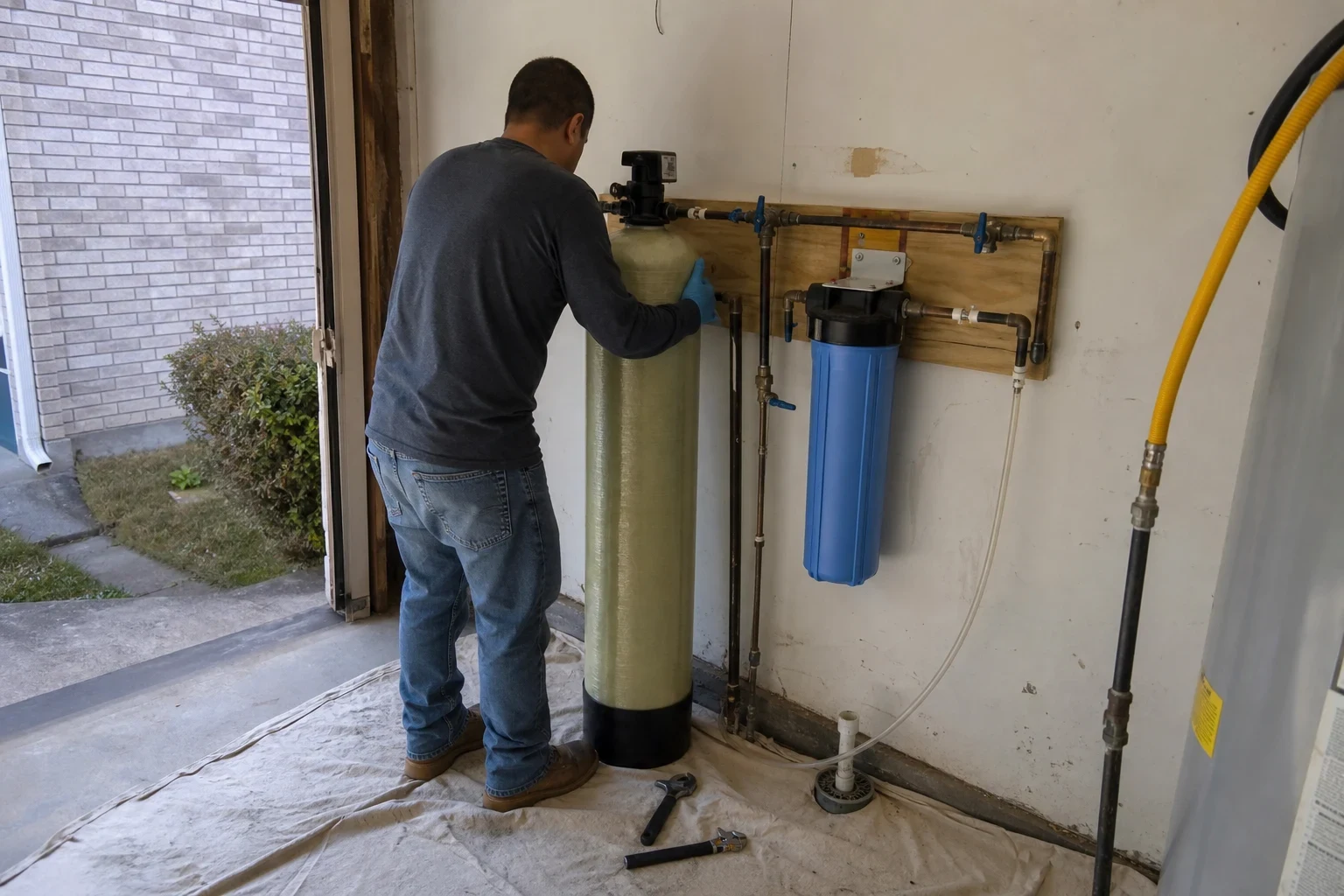
We fit the system where water enters your home and add isolation valves plus a bypass loop. That way a cartridge change or a repair can happen while your taps keep running. Any backwash line is routed to a proper drain.
Protected floors and a tidy finish
Drop cloths go down before tools come out. Joints are wiped and checked for drips, and we take packaging and old parts with us.
A short walk-through of upkeep
We show you how to change a cartridge or check the backwash cycle, and note when service is likely to be due.
Signs your water may need iron or sediment filtration
- Orange or brown stains that come back
- Rings in toilet bowls, streaks below faucets and stains in the tub are the classic mark of iron. They tend to return within days of scrubbing.
- Grit in aerators and showerheads
- Unscrew a faucet aerator. If you find sand or dark flakes, sediment is reaching your fixtures, and it wears on appliance valves too.
- Yellowed or spotted laundry
- White towels and shirts that slowly turn yellow or pick up rust spots, even with good detergent, often point to iron.
- Frequent cloudy water
- Repair work on water mains can stir up sediment, and brief cloudiness that clears is normal. Repeated episodes are worth a test.
- A metallic taste
- A tinny edge in coffee or tea can come from iron in the supply or from corroding pipes inside the house. Testing tells you which.
How the job runs
- 1
A phone call to talk it through
We ask what you are seeing and where. That helps us bring the right test kits and fittings on the first visit.
- 2
Inspection and testing
At your home we take samples, check pressure and look over the plumbing. We explain the findings before we suggest anything.
- 3
A line-item estimate
If a filter makes sense, you get an estimate that names the equipment, the labor and any permit. If it does not, we say so and point to the real cause.
- 4
Installation day
Most installs take a few hours. Water is off only while we cut into the main line, and we let you know before it goes off.
- 5
Flush, retest and final check
We flush the new system, retest the water and confirm every joint is dry before we pack up.
What moves the price
Two homes with the same stained sinks can need very different equipment, so we price after testing, not before. Your estimate lists each part and the labor separately. Nothing is added once work begins without your approval.
- Iron level and type
- Light particulate iron may only need a fine sediment cartridge. Higher dissolved iron, or iron mixed with manganese, calls for an oxidizing media tank, which costs more up front.
- Flow rate and home size
- More bathrooms and heavier daily use mean larger housings or tanks to keep pressure steady.
- Access to the main line
- A main line that sits in the open, say along a garage wall, takes less labor. Pipe hidden behind drywall or squeezed into a cramped utility closet takes longer to reach and fit.
- Drain and power needs
- Backwashing systems need a nearby drain and often an outlet. Adding either takes extra parts and time.
Iron and sediment filtration questions
- Will a water softener remove iron too?
- A softener can take out small amounts of dissolved iron, but it is not built for that job and its resin can foul. If your test shows hardness worth treating, we will talk about water softeners separately. Otherwise a dedicated iron filter is the cleaner answer.
- Do I really need iron filtration on city water?
- Often not. Treated city water usually carries little iron. Stains in homes on city service frequently come from old pipes or the water heater, and we will tell you plainly if that is what we find.
- How often will I replace a sediment cartridge?
- The interval follows the amount of grit in your supply. Some homes go several months between swaps, while others need one sooner after line work nearby. A noticeable fall in water pressure is the clearest sign a cartridge is full. Our filter replacement and maintenance service can keep it on a schedule.
- Will I notice weaker showers after the install?
- You should not. We size housings and tanks to the busiest moment in your home, such as two showers and the dishwasher running together. If flow does start to sag months later, the usual culprit is a cartridge that has filled with grit. Swapping it brings the pressure back.
- Can this work alongside carbon filtration?
- Yes. A sediment stage is often placed ahead of whole-house carbon filtration to keep the carbon from clogging early. We plan the order so each stage does its own job.
Find out what is staining your fixtures
We will test your water, look over your plumbing and give you plain findings before any recommendation. If a filter is not the answer, you will hear that too.