ServicesWater softeners
Water Softeners in Balch Springs, After a Hardness Test
We never start with a softener. We start by measuring the hardness of the water coming into your home, then show you the number and what it means. If a softener makes sense, we size it to your household and install it with care. If it doesn't, we say so.
Start with the reading, then decide
Calcium and magnesium travel in your water without you seeing them. Once that water is heated, the minerals drop out and leave their mark: a white rim around faucets, haze on shower glass, a layer of scale lining the water heater. Inside a softener, resin beads trade those minerals for sodium or potassium, so the buildup no longer forms.
Hardness varies from one supply to the next and can change over time, so we don't assume anything about your water. We test it at your tap, look at your fixtures and water heater, and give you the reading in grains per gallon. Our recommendation follows from that reading, not from a sales sheet.
Sometimes the test points somewhere else. Orange staining may call for iron and sediment filtration, and a chlorine taste is better handled by whole-house carbon filtration. We'll tell you which one fits.
What you get with a softener job
Hardness and iron tested at the tap
Before anything else we read hardness and check for iron, since iron clogs softener resin and changes the equipment required. You watch the results as they come in.
Sized for your household
We base capacity on the grains per gallon we measured, the number of people at home and how much water you really use. A tank that's too big burns salt and rinse water on capacity it never needs. One that's too small regenerates nonstop and wears out sooner.
Location and plumbing
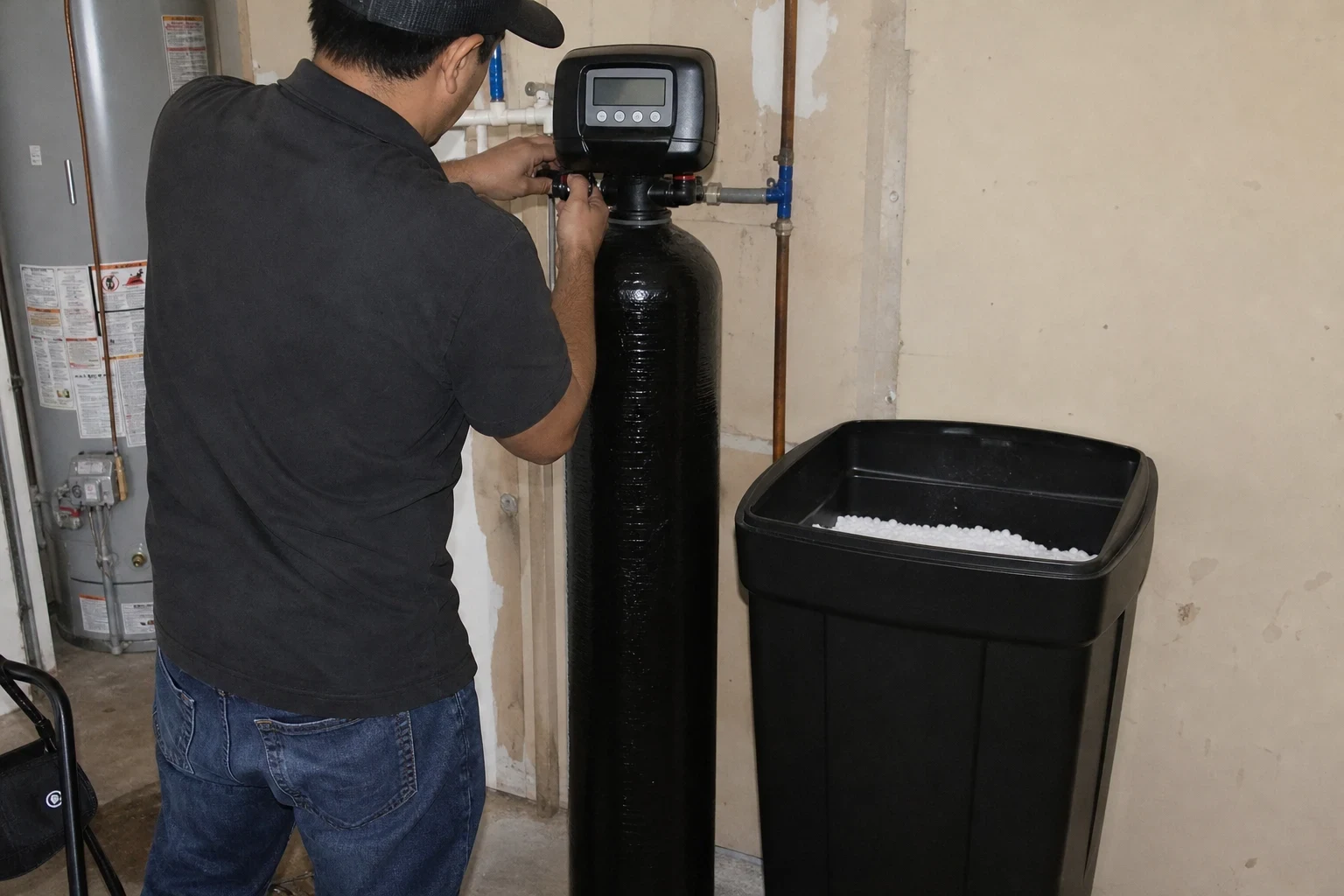
We find a level, sheltered spot near the main line, often in the garage or utility area, with a drain and outlet nearby. A bypass valve goes in with the unit, so you can take it offline without cutting water to the whole house.
Startup and first regeneration
We fill the resin and brine tanks, set the control valve to your hardness and run the first regeneration. After that we test again at a faucet to make sure the water coming out is truly soft.
A tidy wrap-up
We cover the floors in the work area, take cut pipe and packaging away, and wipe everything down before leaving.
Signs a hardness test is worth doing
Crust on faucets and showerheads
Chalky white buildup that returns soon after cleaning is the classic mark of mineral-heavy water.
Spotted glassware and stiff laundry
Hard minerals keep soap from rinsing clean, which leaves cloudy spots on dishes and towels that feel rough.
Crackling from the water heater
Mineral deposits settle at the bottom of the tank, and you hear them pop and knock as the water warms. That crust sits between the burner or element and the water, so each tank of hot water takes longer and costs more energy to heat.
Shampoo and detergent that barely foam
If you find yourself using more than the label suggests, hardness may be binding it up before it can work.
An old softener you're unsure about
If a previous owner left a softener behind, a test tells you whether it still works, needs new resin, or was never needed.
How a softener job runs
- 1
Test and talk
We take hardness and iron readings at your tap and look at your fixtures. You get the numbers in plain terms and our honest view on whether a softener is the right fit.
- 2
Written recommendation
If a softener is warranted, we put the size, the equipment and the line-item cost in writing so you can decide without pressure.
- 3
The install
Water to the house goes off briefly while we fit the bypass valve and plumb the softener into the main line. We run the drain line, open the water back up and check every joint for leaks. Most installs take part of a day.
- 4
Programming and retest
We set the valve to your measured hardness, run a regeneration and test the softened water to confirm the result.
- 5
Walkthrough
We show you how to add salt, use the bypass and read the control. We'll also explain when the resin and valve may need attention, which our filter replacement and maintenance service covers.
What changes the price of a softener
Softeners don't have a set price list, because the right unit depends on your test results and how your plumbing is laid out. Once we have the hardness reading, you get a written estimate with every part listed. These factors shift it.
- Your hardness level
- Harder water takes more resin capacity or more frequent regeneration, which affects the unit's size and type.
- How many people and how much water
- A bigger household with more showers needs a larger tank so the unit isn't regenerating every night.
- Iron or sediment present
- When the test shows iron, a pre-filter may be needed to protect the resin, adding equipment and labor.
- Where it goes and how we reach the pipes
- An existing loop stubbed out in the garage keeps things simple. New lines, a new drain or a hard-to-reach spot add time.
Common questions about softeners
Something not covered here? (972) 787-1656
Is a softener actually necessary for my home?
Not in every case, which is why the test comes first. With a low hardness reading and clean fixtures, a softener would add salt and upkeep with little to show for it. We share the number and give you a straight answer.
Does softened water taste salty?
A softener swaps out the minerals for a small amount of sodium, and most people can't taste it. You can use potassium chloride instead of salt, or add an under-sink reverse osmosis system for drinking water at the kitchen tap.
Will a softener take out chlorine or other contaminants?
No. It deals with hardness minerals and small amounts of iron, not taste or smell. Chlorine is a job for whole-house carbon filtration, and if your test calls for both, we can install a carbon filter and a softener in the same visit.
What upkeep does a softener need from week to week?
Mainly adding salt to the brine tank, about every few weeks depending on your household's water use. Every so often it helps to check the valve settings and look in the brine tank for salt bridging. We handle those checks on a maintenance visit.
Will you check the softener that came with the house?
Yes. We test water going in and coming out to see if it's still softening, inspect the valve and brine tank, and tell you whether it should be repaired, reset or replaced.
Know your hardness before you buy anything
We'll measure your water, explain the result and recommend a softener only if your home needs one. We work in Balch Springs and nearby towns including Mesquite, Seagoville and Forney.